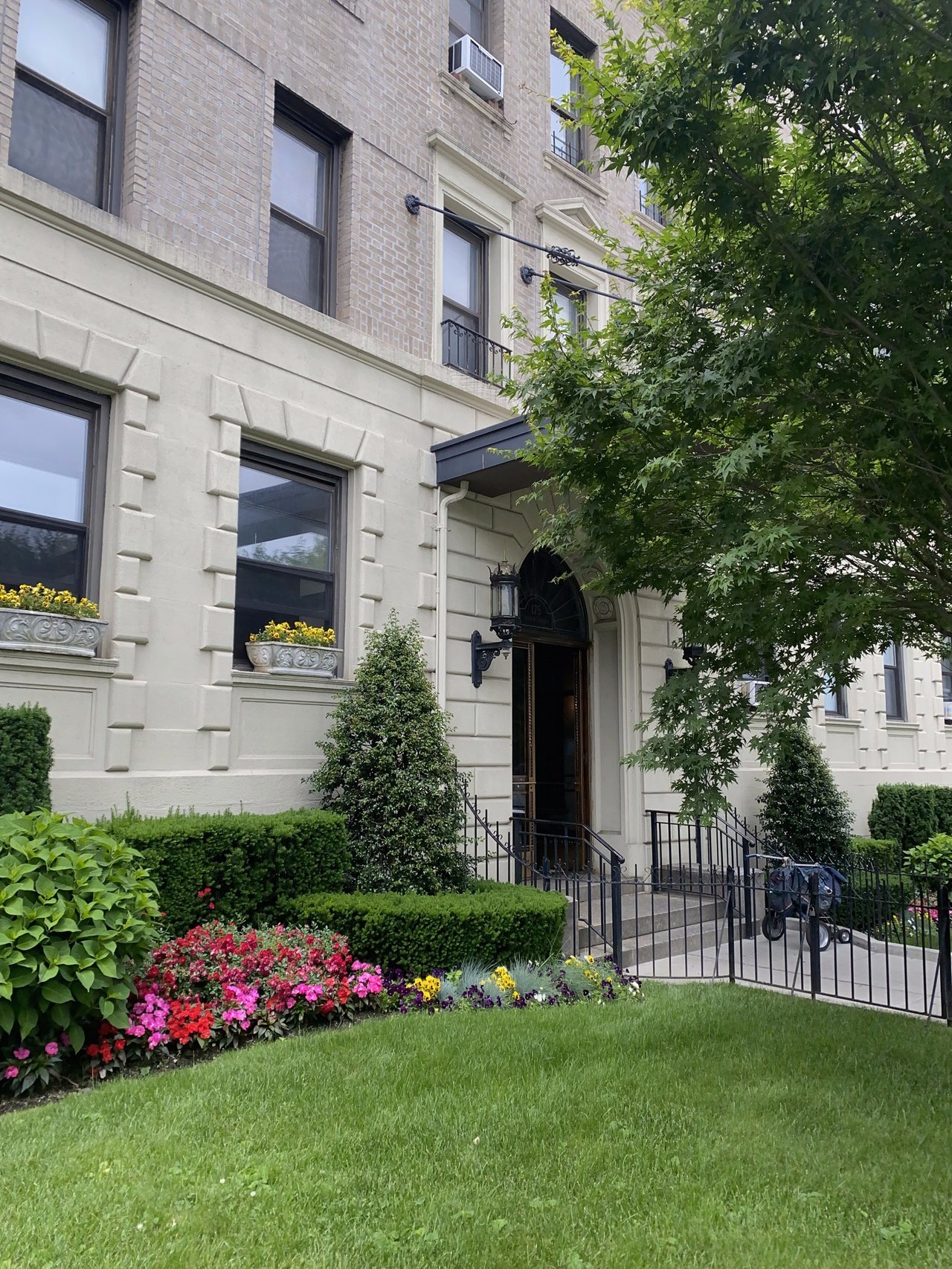
A co-op board can ask about your finances, the package you submitted and how you plan to live in the apartment. It can turn you down for any lawful reason and isn't required to say why. What it can't do is ask about, or decide on, a characteristic that federal, New York State or New York City law protects, and the city's list is long.
How approval works. A co-op, short for cooperative, is a corporation that owns the building. A buyer purchases shares in it and receives a proprietary lease, the document that grants the right to live in one apartment. Because the buyer is joining a corporation, its board of directors, elected by the other shareholders, has to consent to the sale. The buyer submits an application package, the board reviews it, and the interview comes last [1]. The board then consents, consents with conditions, or denies [10]. Brick Underground has reported that a co-op board can reject a buyer "for any lawful reason" and "is not obligated to tell you why" [2]. A condo works differently: the buyer gets a deed, and the board's usual tool is a right of first refusal, meaning it can buy the apartment itself on the same terms, which Brick Underground calls "extremely rare" [2].
What the board already has. The package is mostly financial disclosure. Brick Underground's January 2025 guide lists a financial statement, two years of federal tax returns, bank and brokerage statements, retirement accounts, credit cards and loans, an application form with employment details and references, written consent to a credit check, signed acknowledgments of the house rules and of the lead paint and window guard notices, and personal and professional reference letters, with a landlord letter where one is needed [1]. The same guide says boards typically want to see "six months to two years of maintenance and liquidity after closing," maintenance being the monthly charge each shareholder pays toward running the building [1]. The guide describes the interview as the step where "you'll likely be asked about your package" [1]. The board package post covers assembling it.
Federal and state law. The federal Fair Housing Act of 1968 bars discrimination in selling housing because of race or color, religion, sex, national origin, familial status or disability [3]. The New York State Human Rights Law covers anyone with the right to sell a housing accommodation, and its agents and employees. Its list is race, creed, color, national origin, citizenship or immigration status, sexual orientation, gender identity or expression, military status, sex, age, disability, marital status, status as a victim of domestic violence, lawful source of income and familial status [4]. Lawful source of income was added statewide on April 12, 2019. The Attorney General's guidance says it covers public assistance, housing vouchers such as Section 8, child support, alimony, Social Security and any other lawful income, and names co-op boards among those who can be held accountable [5].
The state law also reaches the questions themselves. It is unlawful "to make any record or inquiry in connection with the prospective purchase" of a home that expresses, directly or indirectly, a limitation based on any of those characteristics [4].
What city law adds. The New York City Human Rights Law protects age, race, color, religion or creed, national origin, gender, pregnancy, gender identity and gender expression, disability, sexual orientation, marital or partnership status, immigration or citizenship status, lawful source of income, lawful occupation, family status including the presence of children, and status as a victim of domestic violence, sex offenses or stalking [6]. The text of the law adds uniformed service, height and weight [7]; the height and weight protections took effect November 26, 2023, and the Commission on Human Rights says height, weight or body size "are never permissible criteria in housing" [8]. The city law applies to anyone with the right to sell a home and to their agents, and the Commission says brokers can be held responsible even when carrying out an owner's wishes [6].
Since January 1, 2025, the city's Fair Chance for Housing Act has also covered co-op and condo boards. A board may not ask about or review criminal history before a written conditional offer. After one, it may look only at felony convictions with a release or sentencing date in the last five years, misdemeanors in the last three, and current sex offense registration. Arrests and pending cases are never permitted grounds [9].
What that means in the room. Questions about the numbers in the package, how you'll carry the maintenance, renovation plans, whether the apartment will be your primary residence and pets under the house rules are ordinary board business. A no-pets rule may have to give way: the Commission's example of a reasonable accommodation is a guide dog or companion animal for someone who is blind or has a psychological disability [6]. Questions about where you were born, your religion, whether you're married, your age, whether you plan to have children or whether you have a disability go to protected characteristics. So does treating a voucher, child support or alimony as lesser income than a salary [5][6]. An improper question can be part of a complaint to the state Division of Human Rights or the city Commission, whatever the board decides.
What changed in 2026. On December 2, 2025, the City Council's housing committee heard bills on co-op approvals, among them Intro 407, which would have required boards to explain a rejection in writing, and Intro 1120, which set deadlines [11]. At that hearing a Commission deputy commissioner testified that of roughly 500 housing complaints filed with the agency over five years, about 10 percent concerned co-ops and only a handful involved purchases [11]. The Council passed Intro 1120-B on December 18, 2025. The mayor vetoed it on December 31, and the Council overrode the veto on January 29, 2026, making it Local Law 58 of 2026 [10]. Intro 407 never left committee and was filed at the end of the session [12].
The law applies to purchase applications made on or after July 28, 2026, in co-ops with 10 or more units; HDFC co-ops and buildings whose sales need a government housing agency's approval are excluded [10][13]. The board has 15 days to acknowledge an application in writing and say whether it is complete. If it misses that, the application is treated as complete as of the day the acknowledgment was due. The board then has 45 days from a complete application to consent, consent with conditions, or deny. It may extend once by up to 14 days if it gives notice before the deadline, and longer only with the buyer's written consent. The clocks pause only during a July and August summer recess the board has formally adopted and told applicants about [13]. The Department of Housing Preservation and Development enforces it, with civil penalties of $1,000 for a first violation, $1,500 for a second and $2,000 for each after that [10]. The law does not require a board to give a reason for a denial [13]. Those clocks feed into how long it takes to buy a co-op.
Where that leaves a buyer. In a building of 10 or more units, a buyer now knows within 15 days that the package arrived and within about 45 days after that whether the answer is yes, give or take one extension and a summer recess. The why still belongs to the board, within the limits above. If you're weighing a co-op and want to understand how a building's approval process runs, start with my buying page, or email me at [email protected] or call 212-516-4569. If a question in an interview crossed one of those lines, that is a conversation for a lawyer.
This is general information, not tax or legal advice.
Ilana Lee, Licensed Real Estate Salesperson, ILNY. Updated November 9, 2026.
Sources
- Brick Underground: How to rejection-proof your NYC co-op or condo application package, January 7, 2025
- Brick Underground: What's the difference between a condo and a co-op in NYC? Which one should you buy?, November 4, 2019
- U.S. Department of Justice, Civil Rights Division: The Fair Housing Act, accessed November 9, 2026
- New York State Senate: Executive Law § 296, Unlawful discriminatory practices, revision of June 5, 2026
- Office of the New York State Attorney General: Source-of-income discrimination, accessed November 9, 2026
- NYC Commission on Human Rights: Housing Providers, accessed November 9, 2026
- NYC Commission on Human Rights: Title 8 of the Administrative Code, the New York City Human Rights Law, accessed November 9, 2026
- NYC Commission on Human Rights: Height and Weight Protections in the New York City Human Rights Law, accessed November 9, 2026
- NYC Commission on Human Rights: Fair Chance for Housing, accessed November 9, 2026
- New York City Council: Int. 1120-B, establishing timelines for cooperative corporations to approve or deny the sale of cooperative apartments (Local Law 58 of 2026), enacted January 29, 2026
- The Real Deal: Co-op boards clash with NYC lawmakers over transparency bills, December 3, 2025
- New York City Council: Int. 407-2024, legislation history, filed December 31, 2025
- New York City Council: Local Law 58 of 2026, text