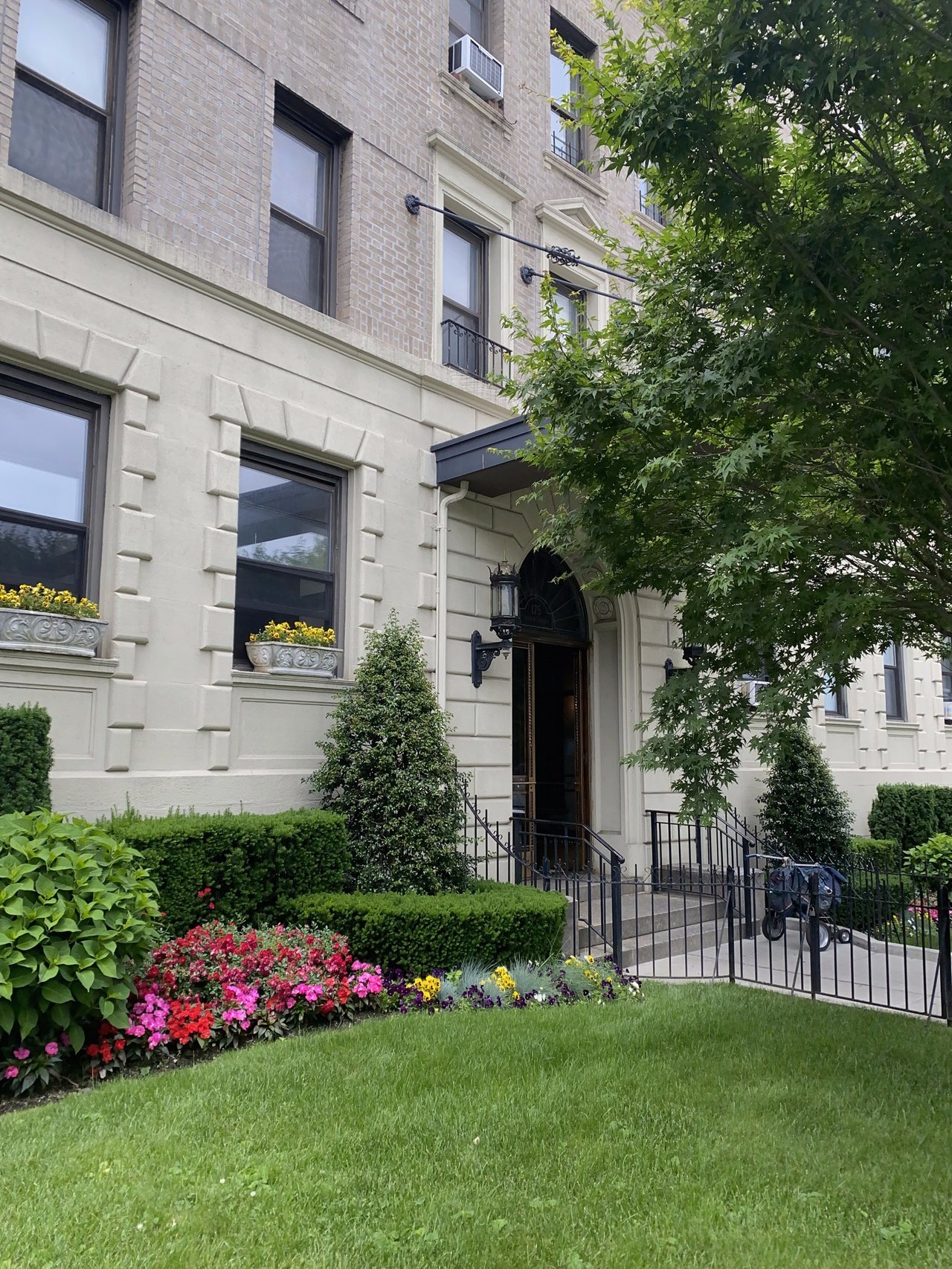
Buying in Prospect Heights means picking one of three kinds of ownership that sit a few blocks apart and behave nothing alike: a landmarked rowhouse, a prewar co-op on Eastern Parkway, or a condo in a newer building toward Atlantic Avenue. The choice decides your tax bill and how the purchase itself goes. Here is the walk.
Start on a side street. St. Marks Avenue, Prospect Place, Park Place: the blocks between Flatbush and Washington Avenues are rows of brownstone and brick houses, most of them built between the middle of the 1800s and the early 1900s in whatever style was current, Italianate through Renaissance Revival [2]. The Landmarks Preservation Commission made about 850 of these buildings a historic district on June 23, 2009, rowhouses mostly, with apartment houses along Vanderbilt and Flatbush [1][2]. A house here is yours in the fullest sense the city allows. The roof, the boiler, the cornice and the sidewalk are your problem, and so is the Landmarks permit when you want to change anything visible from the street; if the house is a two- or three-family, you are also somebody's landlord. An earlier post on historic districts covers living under those rules. I am advising an owner in the district whose single-family has a garden level that may become a rental, and what the house is allowed to be on paper comes before what the apartment would rent for.
Then walk to the Parkway. Eastern Parkway is wide because Olmsted and Vaux meant it to be. They laid it out and built it between 1870 and 1874, and when the Commission made it a scenic landmark on August 22, 1978, its report called it the first of Olmsted's parkways to be completed [3]. The apartment houses that line it, and the ones around the corner on Lincoln Place, St. John's Place, Butler Place and Plaza Street, went up between 1909 and 1929, 106 of them by the count of the Prospect Heights Neighborhood Development Council, which has spent years asking for them to be landmarked as a group on an undated campaign page [4]. It has not happened; the Commission's list of proposed landmarks does not include them [5]. So Prospect Heights runs backwards from what most buyers assume: the modest rowhouses are protected and the grand co-ops are not. Inside, those co-ops are the 1920s plan, with a real dining room and a small room behind the kitchen, and a board that reads your tax returns before you get the keys. The Eastern Parkway post is the room-by-room version. A buyer I showed a Parkway co-op to this fall asked me whether Brooklyn Heights appreciates less than Prospect Heights. Nobody can answer that for one apartment, which is why the building's own sales history tells you more than the neighborhood's.
Then look north. Atlantic Avenue is the edge that is still being built. Barclays Center opened in 2012, and the housing promised around it, Pacific Park, once Atlantic Yards, is about half done: 3,212 apartments built of a planned 8,800 under the state's July 28, 2026 agreement with a new developer, 1,374 of them affordable against a requirement of 2,250, and the deck over the rail yard not before the end of 2032 [6][7]. A condo on Dean or Pacific Street comes with a decade of construction to the north. Some buyers want the discount that carries. Know before you sign.
What the tax bill knows. The city taxes these three kinds of home differently, and the difference compounds. A house, one to three families, is class 1: assessed at 6 percent of market value, and the assessment cannot rise more than 6 percent a year or 20 percent in five, which is why a brownstone held for twenty years carries a tax bill that looks like a mistake [8][9]. A co-op or condo in a building of eleven or more units is in the main part of class 2, assessed at 45 percent of a market value the Finance Department must, by state law, work out as if the building were a rental [8][10]. There are two wrinkles. A condo in a building of three stories or fewer can land in class 1, and a co-op or condo building of two to ten units is sub-class 2c, with caps of its own, 8 percent a year and 30 in five [8][9]. Before you compare monthlies, get the actual bill and read the class off it.
How the buying itself goes. The three purchases run on different clocks. The co-op is the slow one: after the accepted offer come the board package and the interview, on a timeline I laid out in how long it takes to buy a co-op. I went through a co-op board myself this year, as the buyer, and assembling the package took longer than agreeing the price. The condo is faster, with an offering plan to read and a board whose main power is a right of first refusal it almost never uses. The house has no board at all, which is the appeal, and instead has an inspection that matters more than in any apartment and a title search on a building that may have changed hands a dozen times since the 1880s. My co-op versus condo post has the ownership detail.
What the market shows. The market here is mostly apartments and mostly condos. In 2026 so far 123 apartments and 17 houses have closed in the brokers' database, which misses houses sold off-market, so about one recorded sale in eight is a house. In the six months to November 16, 2026, condos closed at a median of $1,650,000 and co-ops at $950,000, and the year's seventeen houses had a median of $3,850,000, a figure a few sales could move [11]. What buying feels like: apartments here go to contract in about a month, 31 days for the median condo and 33 for the median co-op among listings that report it, and the typical sale closes a point or two under the ask, with a minority bid over [11].
If you are trying to work out which of the three you are, email me at [email protected] or call 212-516-4569 and I will go through a specific building's documents with you.
Ilana Lee, Licensed Real Estate Salesperson, ILNY. Published November 20, 2026.
Sources
- Landmarks Preservation Commission: Public meeting, June 23, 2009
- Landmarks Preservation Commission: Prospect Heights Historic District Designation Report, LP-2314
- Landmarks Preservation Commission: Eastern Parkway Scenic Landmark Designation Report, LP-0998
- Prospect Heights Neighborhood Development Council: Prospect Heights Apartment House District
- Landmarks Preservation Commission: Proposed landmarks
- Empire State Development: Atlantic Yards Phase II Memorandum of Understanding, August 2026
- Empire State Development: Atlantic Yards Public Workshop 4 presentation, March 19, 2026
- NYC Department of Finance: Definitions of property assessment terms
- NYC Department of Finance: Determining your assessed value
- NYC Department of Finance: Determining your market value
- RealPlus apartment sales analytics and townhouse market analytics, Prospect Heights, closed sales, pulled November 16, 2026. Six months to November 16: 39 condos (37 with square footage, median $1,515 a foot; 26 with days on market), 35 co-ops and condops (28 with days on market). Year to date: 123 apartments, 17 houses. Counts are brokered listings and miss off-market sales.