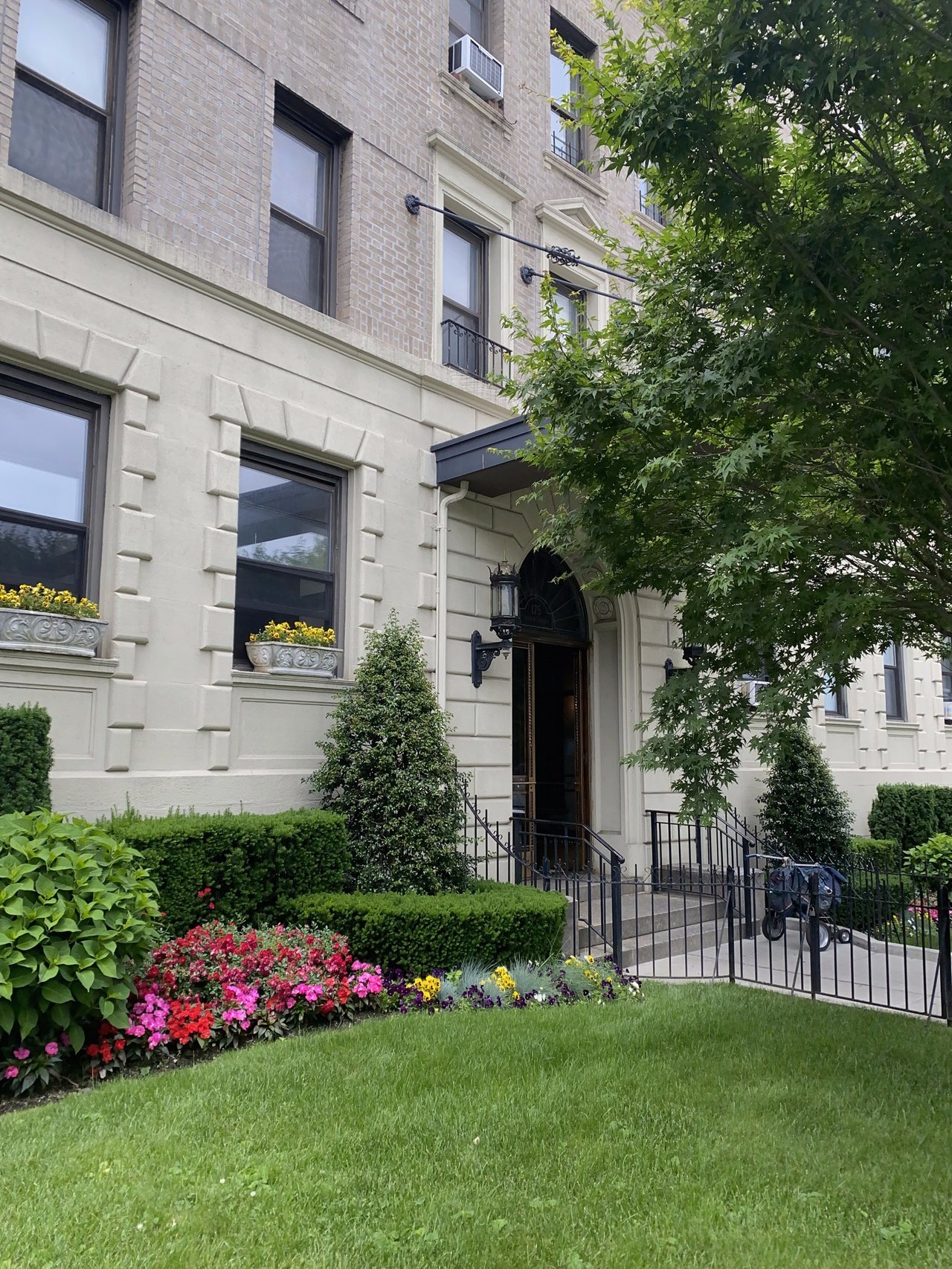
Yes. Earlier this year I spent an afternoon touring Upper East Side townhouses with a client relocating from abroad, and what set that search apart was paperwork and nothing else. New York City's Human Rights Law bars housing discrimination based on immigration or citizenship status and national origin [1]. What changes when you live somewhere else is a lender's document list, a possible tax surcharge if the apartment will be a second home, and a federal withholding the day you eventually sell.
The loan comes first. A buyer whose income and credit history sit outside the United States gets asked for documents from abroad, and terms differ from lender to lender, so get the down payment, rate and document list in writing before you make an offer. In a co-op, the corporation that owns the building, the board votes on you and reads the loan along with everything else in the package; the city's Human Rights Law applies to that vote [1]. If you would rather skip the board, a sponsor unit, an apartment sold by the party that converted or developed the building, usually does: attorney Aaron Shmulewitz told CooperatorNews in September 2016 that "sponsor sales are generally exempt from board approval in a co-op" [2]. More in what a sponsor unit is. A condo gives you a deed, and its board's power over a sale is a right of first refusal, which boards use "less than five percent of the time," Shmulewitz estimated in 2008, calling the figure anecdotal [3]. Sponsor units are generally not subject to it either [2].
If the apartment will not be your main home, the city may charge for that. For the tax year that began July 1, 2026, co-op and condo units the Department of Finance values at $1,000,000 or more carry a surcharge unless the unit is the primary residence of the owner, a tenant or certain family members, and the first charges land on the bill due January 1, 2027 [4]. A June 2026 client alert from Loeb & Loeb reads primary residence as living there a majority of days in a calendar year [5]. Whether it reaches a given apartment is in does NYC's pied-à-terre tax apply to my primary residence.
Then there is the day you sell. Under FIRPTA, the Foreign Investment in Real Property Tax Act, when a foreign person sells U.S. real estate the buyer generally must withhold 15 percent of the amount realized and send it to the IRS, filing Form 8288 and paying by the 20th day after the transfer [6][7]. On a $2,000,000 sale that is $300,000 held back at closing. The rate drops to 10 percent when the buyer acquires the property as a residence and the amount realized is $1,000,000 or less [7], and to nothing at $300,000 or less when the buyer, an individual, or a member of the buyer's family has definite plans to live there at least half the days it is used in each of the first two years [8]. Either side can apply on Form 8288-B for a certificate that reduces or removes the withholding, and the seller still reports the sale on a U.S. return for that year [6].
Two more things a lawyer will raise. The estate of a nonresident who was not a U.S. citizen files Form 706-NA when U.S. assets, real estate included, plus certain gifts exceed $60,000, a threshold not indexed for inflation; the IRS keeps a list of estate and gift tax treaties [9]. And buying through an LLC comes with disclosure rules of its own. As of November 2026, New York State will not accept the transfer tax return for a one- to four-family dwelling conveyed to or from an LLC without documents naming every member, manager and authorized person, traced down to the natural persons behind it [10]. New York's LLC Transparency Act took effect January 1, 2026, and according to Pryor Cashman's January 7 alert it requires beneficial ownership reports only from LLCs formed outside the United States and registered here, by December 31, 2026 for those registered before the law took effect and within 30 days for later ones [11]. Federally, FinCEN's beneficial ownership rule took final form on August 14, 2026 and U.S. companies no longer report [12], and its separate rule on residential transfers to entities and trusts was vacated by the federal court for the Eastern District of Texas on March 19, 2026; FinCEN has appealed, and those reports are not currently required [13].
Decide co-op or condo and how title will be held before the first showing, because those two choices set every document you will be asked for. For the list on the apartments you are considering, email me at [email protected] or call 212-516-4569.
This is general information, not tax or legal advice.
Ilana Lee, Licensed Real Estate Salesperson, ILNY. Updated November 23, 2026.
Sources
- NYC Commission on Human Rights: The law, accessed November 9, 2026
- CooperatorNews: What you should know about sponsor units, September 22, 2016
- CooperatorNews: The right of first refusal: what your board should know, July 2008
- NYC Department of Finance: Non-primary residence surcharge, accessed November 9, 2026
- Loeb & Loeb: New York City pied-à-terre tax takes effect July 1, June 2026
- Internal Revenue Service: FIRPTA withholding, updated July 21, 2026
- Internal Revenue Service: Instructions for Form 8288, revised January 2026
- Internal Revenue Service: Exceptions from FIRPTA withholding, updated July 15, 2026
- Internal Revenue Service: Estate tax for nonresidents not citizens of the United States, updated June 28, 2026
- New York State Department of Taxation and Finance: Instructions for Form TP-584-NYC, August 2025
- Pryor Cashman: New York LLC Transparency Act takes effect with limited scope, January 7, 2026
- FinCEN: Beneficial ownership information reporting, alert of August 11, 2026
- FinCEN: Residential real estate frequently asked questions, May 18, 2026