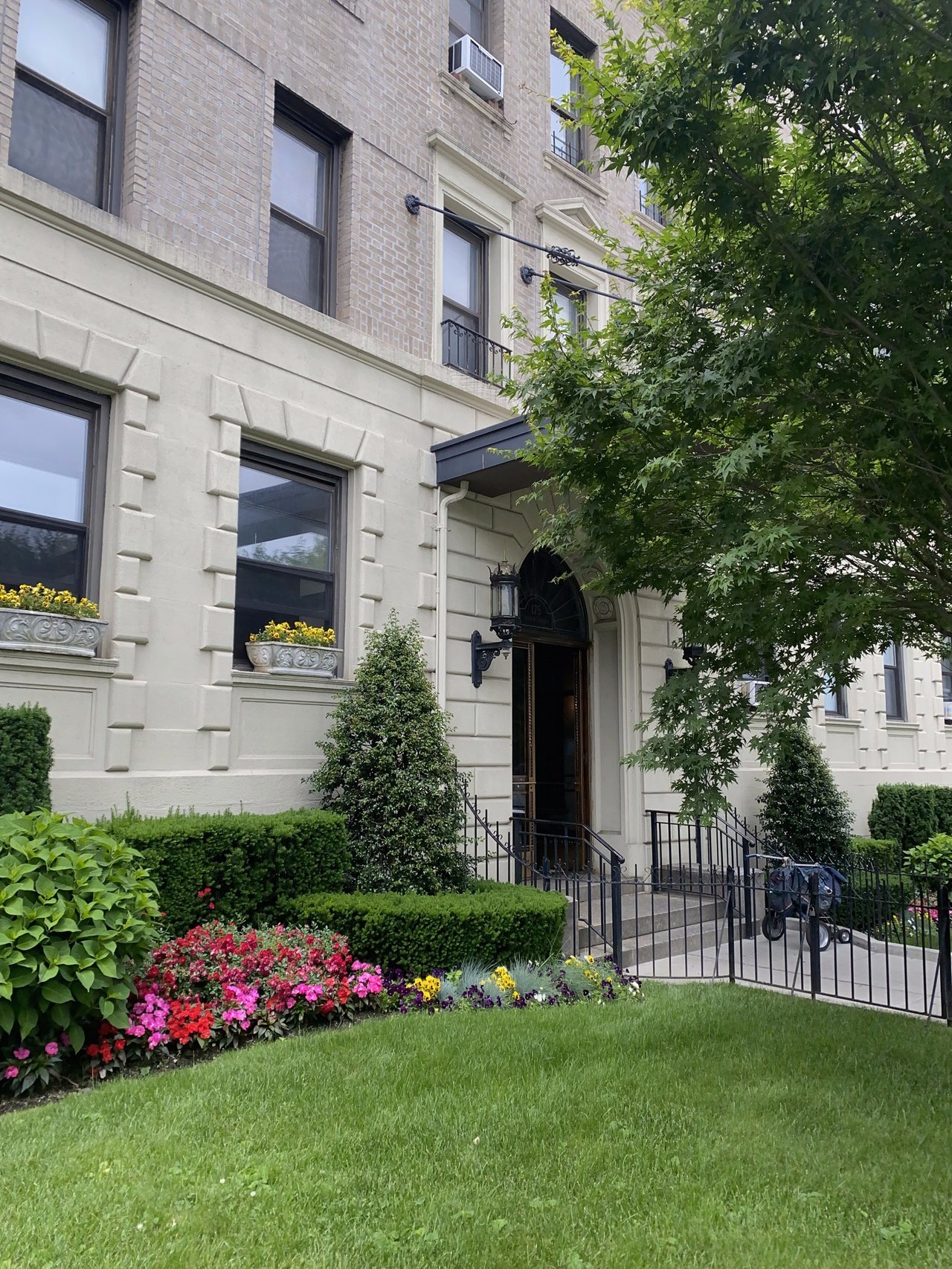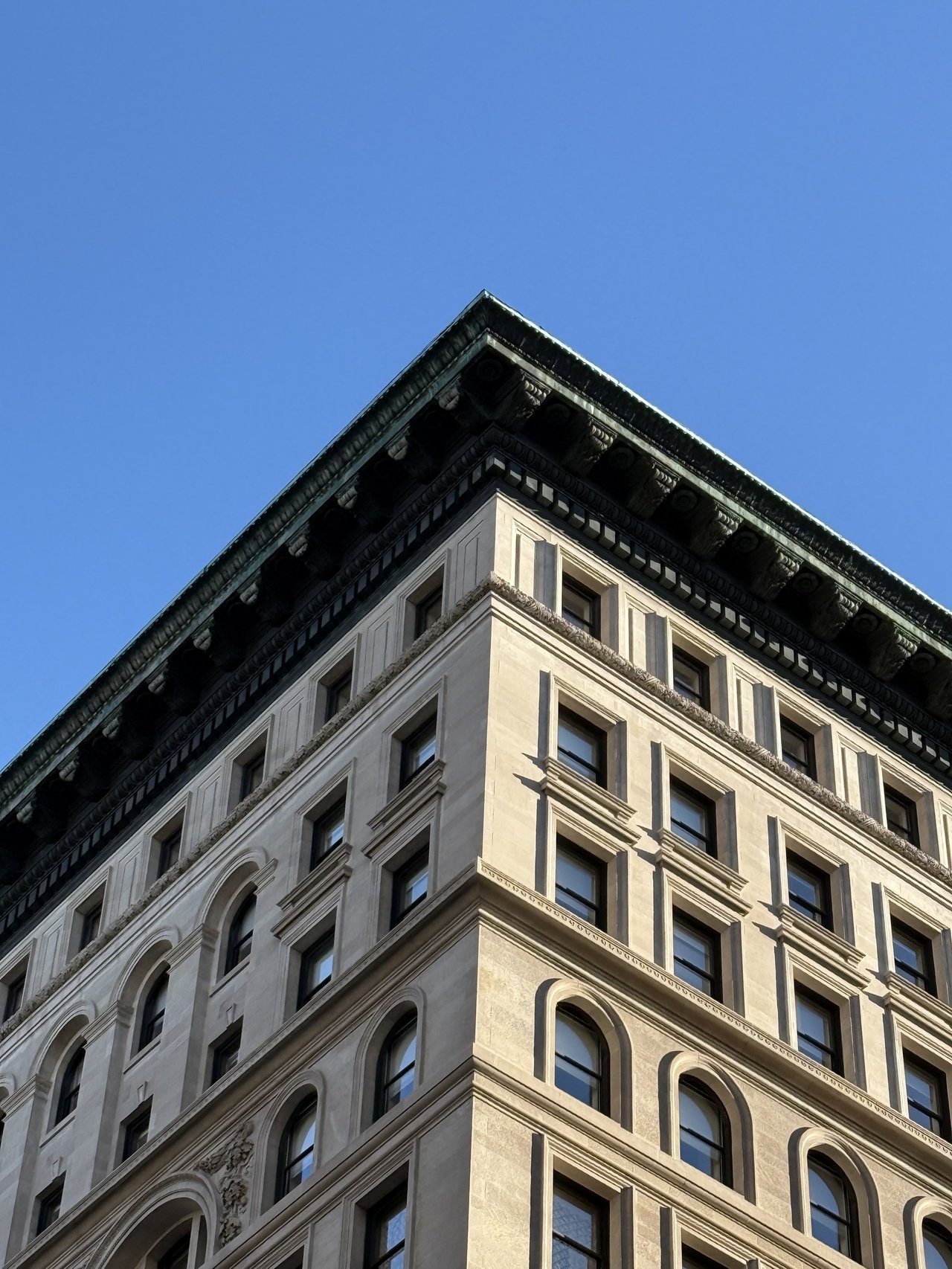
It hurts the photographs, the first impression at the curb and sometimes the terrace. Whether it hurts the price depends on which of those your apartment is selling. The shed is the visible end of a city inspection cycle that puts every building taller than six stories through a facade check every five years, and the permit record tells you how long it has been up and whether the work behind it is moving. Once you know where your building sits in that cycle, you can decide whether to sell through it, wait it out, or rent until it is gone.
The shed is there because of Local Law 11, now run by the Department of Buildings as the Facade Inspection and Safety Program. It dates to 1980, after a falling piece of masonry killed a student, and was expanded in 1998. Every building over six stories must have its exterior walls examined by a qualified engineer or architect and a report filed with the Department of Buildings once every five years [1][2]. If the inspector finds an unsafe condition, a shed goes up immediately, the building has 90 days to make the repair, with extensions, and the shed stays until the work is signed off [1]. Much of the scaffolding you walk under is a building working through that list.
Where your building sits in the cycle is a matter of its tax block number. Cycle 10 began on February 21, 2025 and runs to 2030 in three windows set by the block's last digit: 4, 5, 6 or 9 file first, from February 2025; 0, 7 or 8 from February 2026; 1, 2 or 3 from February 2027, each with two years to do it [1][2]. Your managing agent knows the block number and, more usefully, when the board plans to inspect and what the last report flagged. Ask for both before you set a listing date.
The rules around sheds changed in 2025. On April 17, 2025, the city signed a package of sidewalk shed laws: shed permits for facade repairs now run three months instead of a year and cannot be renewed until penalties are paid, owners who leave a shed up without progress face penalties that scale with how long it has stood, and the inspection cycle itself was changed in law from five years to a span of six to twelve, to be set by the Department of Buildings by rule after a study, so five years still governs until that rule lands [3][4]. On March 6, 2026, the Mamdani administration proposed the first of those changes: inspections every six years instead of five, a twelve-year hands-on interval for low-risk buildings, and penalties for sheds up more than 180 days with status reports every 90 days [5]. For a seller the practical effect is that a shed with no work behind it is now expensive for the building to keep, so "when does it come down" has a firmer answer than it used to.
There is no New York study I can point to that prices the effect of scaffolding on apartment sales; the data that exists is about street-level businesses, which lose transactions while a shed is up [6]. What I see is specific. A shed costs you the exterior photograph and the first impression at the curb, and if the apartment's selling point is a terrace or a low-floor view, it costs you that too while the work is on your facade. An interior-led apartment on a high floor can sell through a shed with little effect. The apartment that should wait is the one whose best feature is outside the window.
That leaves three routes. Sell through it, and price the photographs you cannot take. Wait for it, if the managing agent can show you a signed repair contract and work actually moving; a 90-day shed permit renews as long as work continues, so an expiry date on its own is not a removal date. Or rent it until the work is done. One owner I worked with this year had a terrace apartment that could not be marketed honestly until the facade scaffolding came down in February, so she rented it for a year with a 90-day notice clause, covered her carrying costs through the winter, and will list it with the terrace in the photographs. How a lease like that is set up is in how renting an apartment in NYC works.
Ask the managing agent three things in writing: the building's FISP sub-cycle, the date of the last filed report and what it flagged, and the current shed permit's expiry. Then pick the route that fits your apartment. The rest of the preparation is in how to get a co-op ready to sell and the numbers are in what it costs to sell an apartment in New York. I can read the report and the permit with you: [email protected] or 212-516-4569.
This is general information, not tax or legal advice.
Ilana Lee, Licensed Real Estate Salesperson, ILNY. Updated November 24, 2026.
Sources
- NYC Department of Buildings: Facade Inspection and Safety Program (FISP) Cycle 10 service notice
- NYC Department of Buildings: Buildings News, February 27, 2025, Cycle 10 kickoff
- Office of the Mayor: Mayor Adams signs historic legislation to "Get Sheds Down," April 17, 2025
- RAND Engineering & Architecture: New 2025 local laws that could reshape sidewalk sheds and FISP cycles, summarizing Local Laws 47 to 50 of 2025
- Office of the Mayor: Mayor Mamdani launches new efforts to take sidewalk sheds down, March 6, 2026, checked November 10, 2026
- 6sqft: Council passes legislation to reduce NYC's 400 miles of scaffolding, March 27, 2025, citing the restaurant transaction study