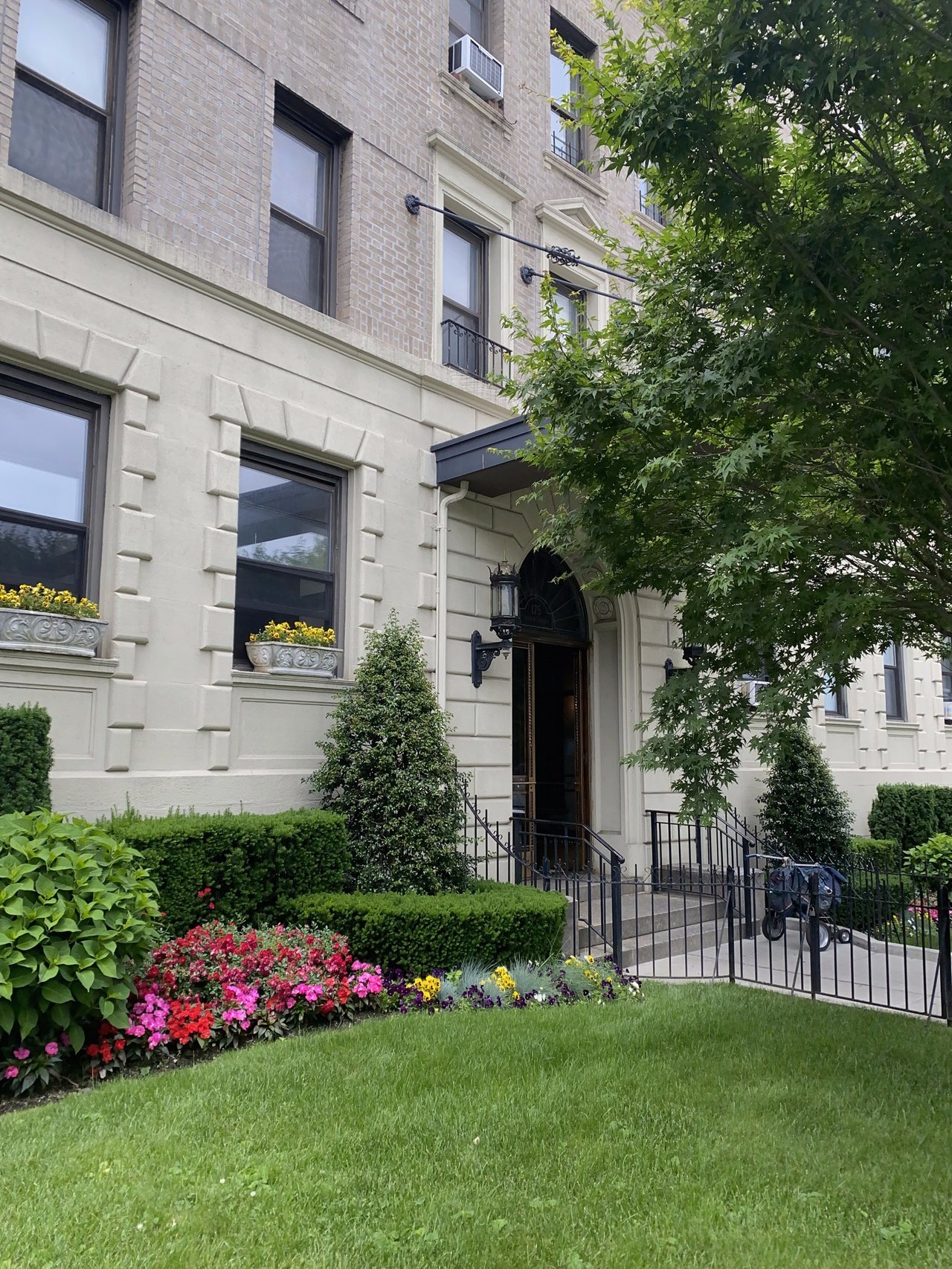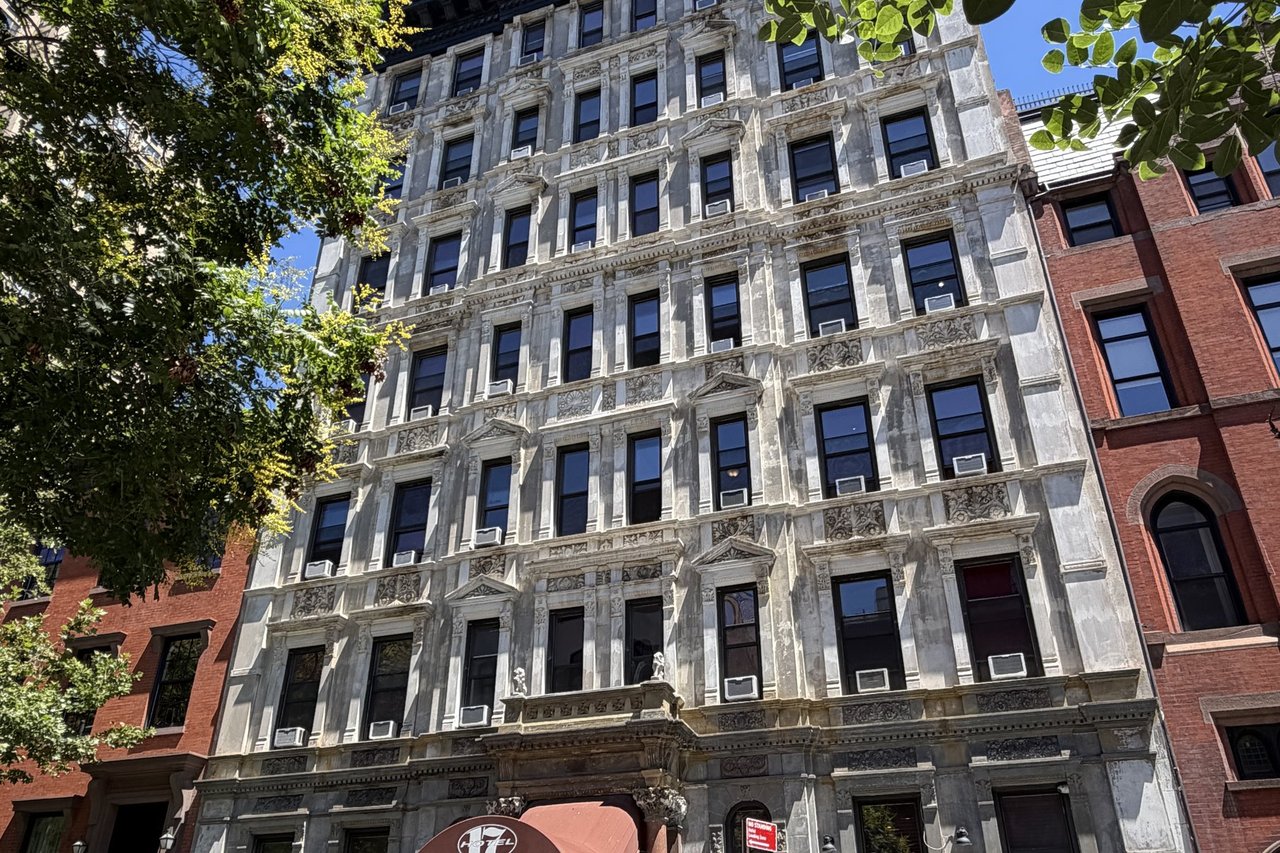
New York is full of co-ops because the city was building cooperative apartment houses for more than 80 years before the state allowed condominiums, and a wave of rental conversions from the 1960s through the '80s locked the habit in [1][6][8]. Co-ops still outsell condos in Manhattan [9]. That is why buying an apartment here so often means a board package and an interview.
The first was the Rembrandt on West 57th Street, built around 1880 [1][2]. Its architects, Hubert, Pirsson & Co., went on to build a series of "Home Clubs," the Chelsea among them, where residents owned the building together and shared a central kitchen and dining room [1][3]. 34 Gramercy Park East, finished in 1883, is the city's longest surviving co-op [2].
The idea spread to unions and the middle class. In 1927 the Amalgamated Clothing Workers union sponsored the Amalgamated Housing Cooperative in the Bronx, which still houses 1,482 families [4], and the Mitchell-Lama program, signed into law in 1955, added about 70,000 more co-op apartments for middle-income New Yorkers [5].
Then came the conversions. From the 1960s through the '80s, many rental buildings converted to co-ops and tenants were offered insider prices; a lawyer who worked on hundreds of those deals put non-eviction insider prices at least 50 percent below market [6]. Today a non-eviction conversion in the city needs signed purchase agreements from tenants in occupancy covering at least 51 percent of the apartments [7].
Condos came late. New York's Condominium Act passed in 1964, and condos only started showing up in the late 1960s and '70s [8]. In the six months to November 24, 2026, 3,358 Manhattan co-ops and condops closed against 2,711 condos [9].
The board's power comes from the structure. A co-op is a corporation: you buy shares and receive a proprietary lease rather than a deed [10], which is why the board, on behalf of the other shareholders, decides who joins. In 1990, in Levandusky v. One Fifth Avenue, New York's top court held that courts defer to co-op boards under the business judgment rule [11]. Since Weisner v. 791 Park Avenue in 1959, boards have been able to turn a buyer down for any lawful reason or no reason [12]. A City Council bill to make boards put their reasons in writing, Int. 774, has been in committee since March 10, 2026 [15].
A narrower law did pass. Under Local Law 58 of 2026, for applications filed from July 28, 2026, a co-op with ten or more apartments must acknowledge a purchase application within 15 days and approve or deny it within 45 days of a complete package. The board can take one 14-day extension on its own, and the clock pauses for a declared July and August summer recess; anything longer needs the buyer's written consent. HDFC co-ops and co-ops whose sales need a government housing agency's sign-off, such as Mitchell-Lama, are exempt, and the Department of Housing Preservation and Development enforces it with fines starting at $1,000 [13][14].
A co-op asks more of you up front, from the financial package to the interview, and in return everyone else in the building went through the same process.
If you're weighing a co-op against a condo, co-op vs condo lays out the trade-offs, and I'm happy to walk through them for the buildings you're considering. Email me at [email protected] or call 212-516-4569.
Ilana Lee, Licensed Real Estate Salesperson, ILNY. Updated November 24, 2026.
Sources
- NYC LPC: Gramercy Park Historic District extension report
- CooperatorNews: a history of cooperative housing in NYC
- NYC LPC: Hotel Chelsea designation report
- Amalgamated Housing Cooperative: about us
- Cooperators United for Mitchell-Lama: history
- Habitat: memories of a major player
- NY General Business Law §352-eeee
- CooperatorNews: the condo as legal entity
- RealPlus apartment sales analytics, Manhattan, closed sales May 29 to November 24, 2026: 3,358 co-op and condop closings and 2,711 condo closings, pulled November 24, 2026
- Brick Underground: What's the difference between a condo and a co-op in NYC? Which one should you buy?, November 4, 2019
- NY Court of Appeals: Levandusky v. One Fifth Ave. Apt. Corp.
- Habitat: the co-op board rejection process
- NYC Council: Int. 1120-B, enacted as Local Law 58 of 2026
- Brick Underground: co-op boards face a new timeline to approve or reject applications
- NYC Council: Int. 0774-2026, written reasons for rejection