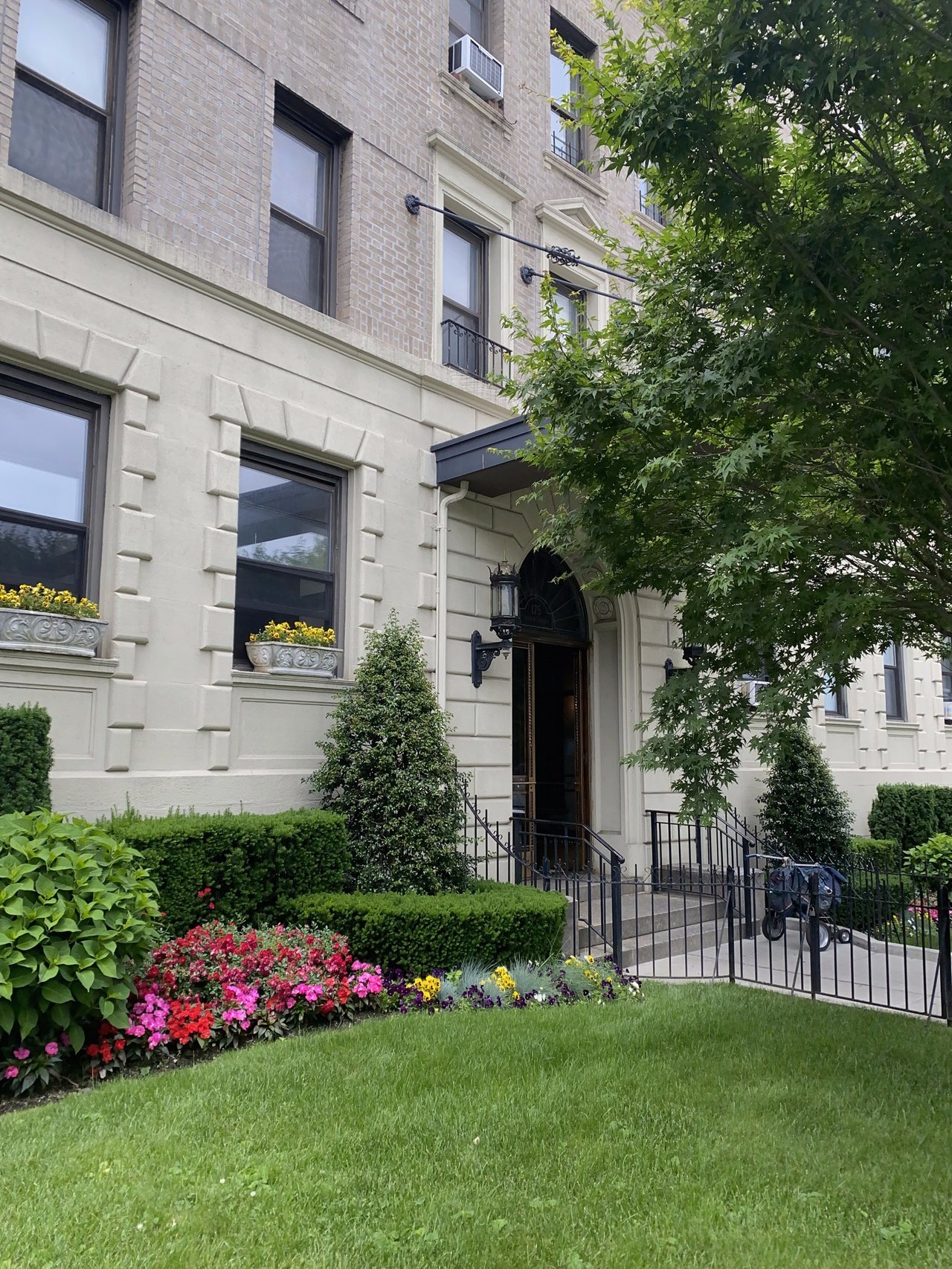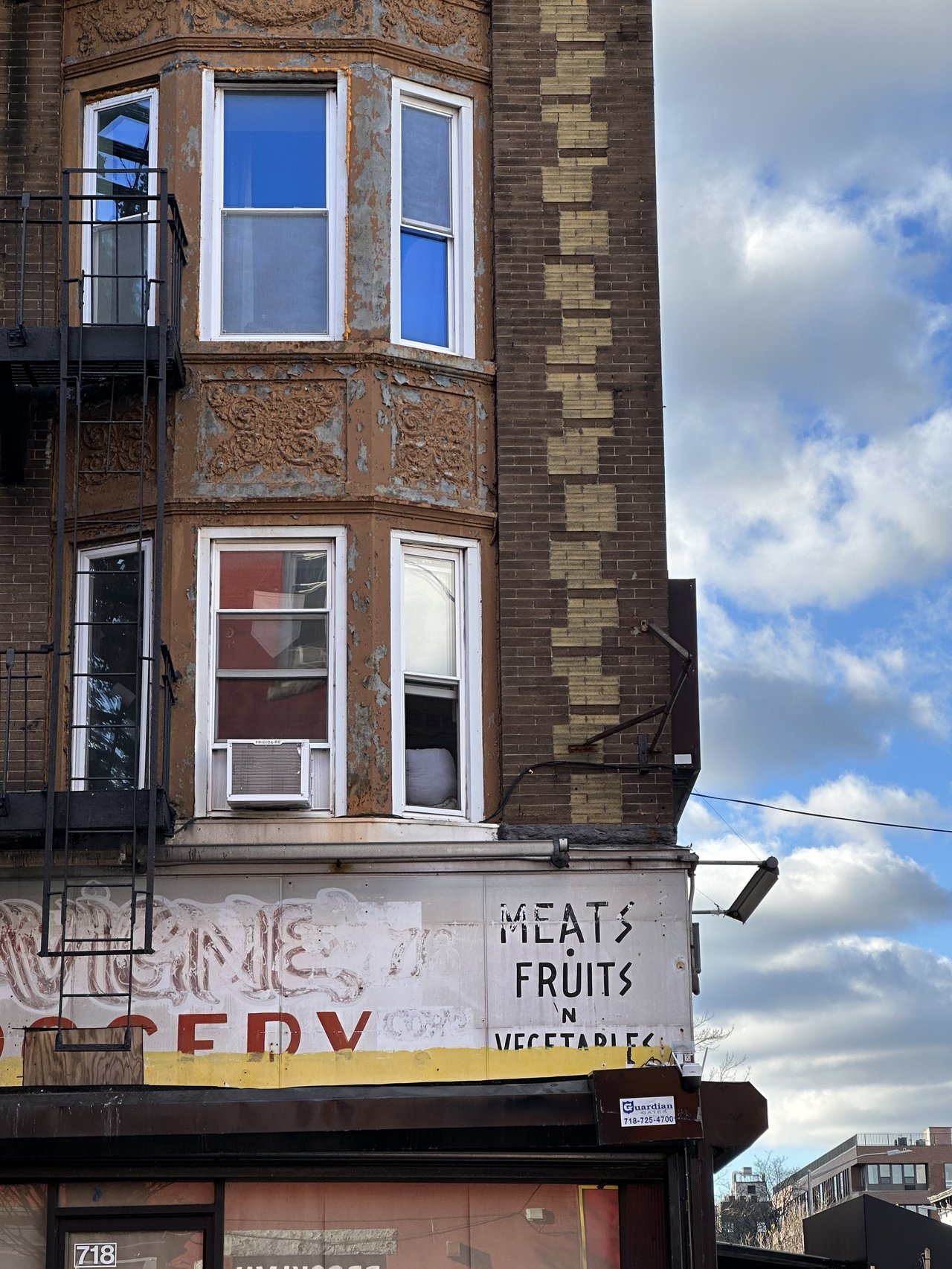
A foyer you could park a bicycle in, a dining room with two doors, and a small room behind the kitchen that nobody calls the maid's room out loud anymore. An Eastern Parkway prewar is a 1920s plan built for entertaining and for live-in help. The buildings that hold these plans in Crown Heights are mostly co-ops now, so you buy shares in the corporation that owns the building, and what you check before you fall for the foyer is the building's financial statement.
The parkway came first, by about fifty years. Frederick Law Olmsted had the idea as early as 1866, a new kind of road built for pleasure driving and scenic access to Prospect Park; he and Calvert Vaux designed it, it was built from 1870 to 1874, the first of Olmsted's parkways to be finished [1][2], and the Landmarks Preservation Commission designated it a scenic landmark on August 22, 1978 [1]. A legal fight over title to the land the city had taken for park purposes stalled building along it for about forty years, until a title guarantee in 1910 [1]. Then the IRT opened under the roadway in 1920 and elevator apartment houses went up near the express stops [3]. The subway made the parkway a street people could live on.
The layouts date from those years. Prewar plans separated public rooms, private rooms and service: foyer or gallery, living room and dining room out front, with the kitchen and the staff room reached through the dining room, which is why the dining room has two doors and why the small room behind the kitchen exists. Today that room is an office, a nursery or a second bath, and the listing will call it a "maid's room" or a "bonus room"; the vocabulary is decoded in what NYC listing descriptions actually mean. A step down from the foyer into the living room is a 1930s habit that survived for the sense of scale it gives the room.
Check the address against the historic districts. Crown Heights North was designated April 24, 2007 with more than 450 buildings and sites, Crown Heights North II on June 28, 2011 with 630, and Crown Heights North III on March 24, 2015 with more than 600 [3][4]. All three sit north of the parkway. A landmarked building needs Landmarks permits for window and facade work, and most of the parkway apartment houses themselves sit outside the districts.
Then read the money. In a co-op you hold shares and a proprietary lease, your maintenance covers the building's mortgage, taxes and operations, and a board approves your buyer when you sell. Ask for the last two years of audited financial statements and read them for the reserve fund, for the maturity date and terms of the underlying mortgage (an interest-only loan that resets at a higher rate shows up as a maintenance increase), and for any assessment, a temporary charge on top of maintenance for a project the reserve cannot cover. Ask whether the building owns its land; a handful of co-ops in the city sit on ground leases, and any lease should appear in the listing with its expiration date. The flip tax some co-ops charge the seller at closing is in how flip tax works, the board package in what goes in a co-op board package, and the co-op and condo mechanics in co-op vs condo.
The neighborhood numbers will not price a parkway apartment for you. In the six months to November 10, 2026, 102 condos closed across the Crown Heights section at a median of $1,325,000 and $1,287 a square foot after 49 days on the market, and only nine co-ops, at a median of $500,000. Houses are the other market: 164 closed so far in 2026 at a median of $1,632,500 and $664 a square foot from the 102 that reported it (RealPlus, Manhattan, Brooklyn and Queens listing data, pulled November 10, 2026) [5]. Nine co-op sales is too few to call a price. Price any one of these apartments against its own building's history.
Pick two or three buildings on the parkway and request their financials before you request a showing. I read co-op statements for buyers and can tell you what an assessment or a maturing mortgage means for the monthly number; the rest of the neighborhood is on the Crown Heights page. Email [email protected] or call 212-516-4569.
This is general information, not tax or legal advice.
Ilana Lee, Licensed Real Estate Salesperson, ILNY. Updated November 23, 2026.
Sources
- NYC Landmarks Preservation Commission: Eastern Parkway scenic landmark designation report, LP-0998, August 22, 1978
- NYC Parks: Eastern Parkway history
- NYC Landmarks Preservation Commission: Crown Heights North II Historic District designation report, LP-2361, June 28, 2011; Crown Heights North designation report, LP-2204, April 24, 2007
- NYC Landmarks Preservation Commission: LPC approves the Crown Heights North III Historic District, March 24, 2015
- RealPlus apartment sales analytics and townhouse market analytics, Crown Heights section, pulled November 10, 2026