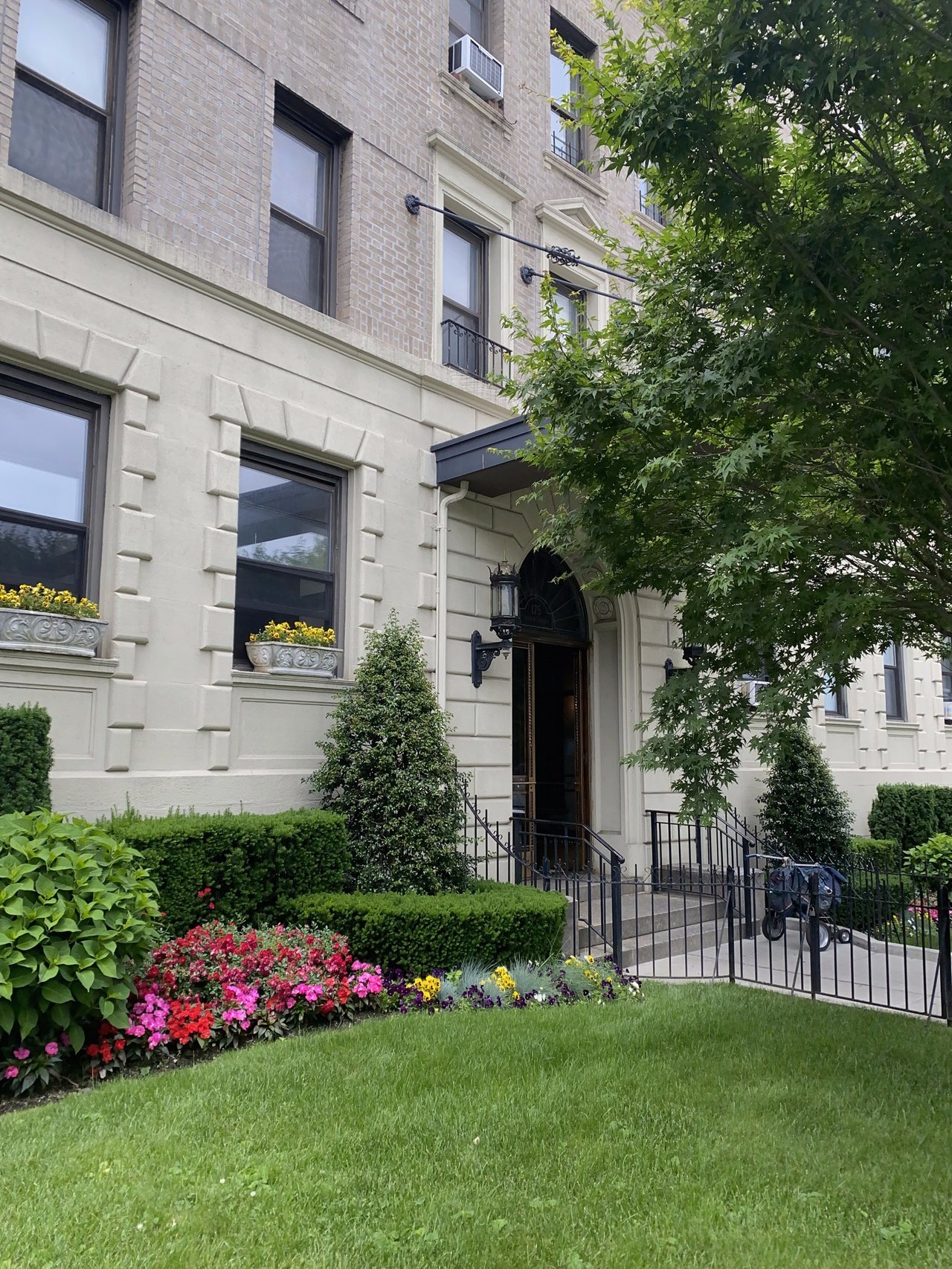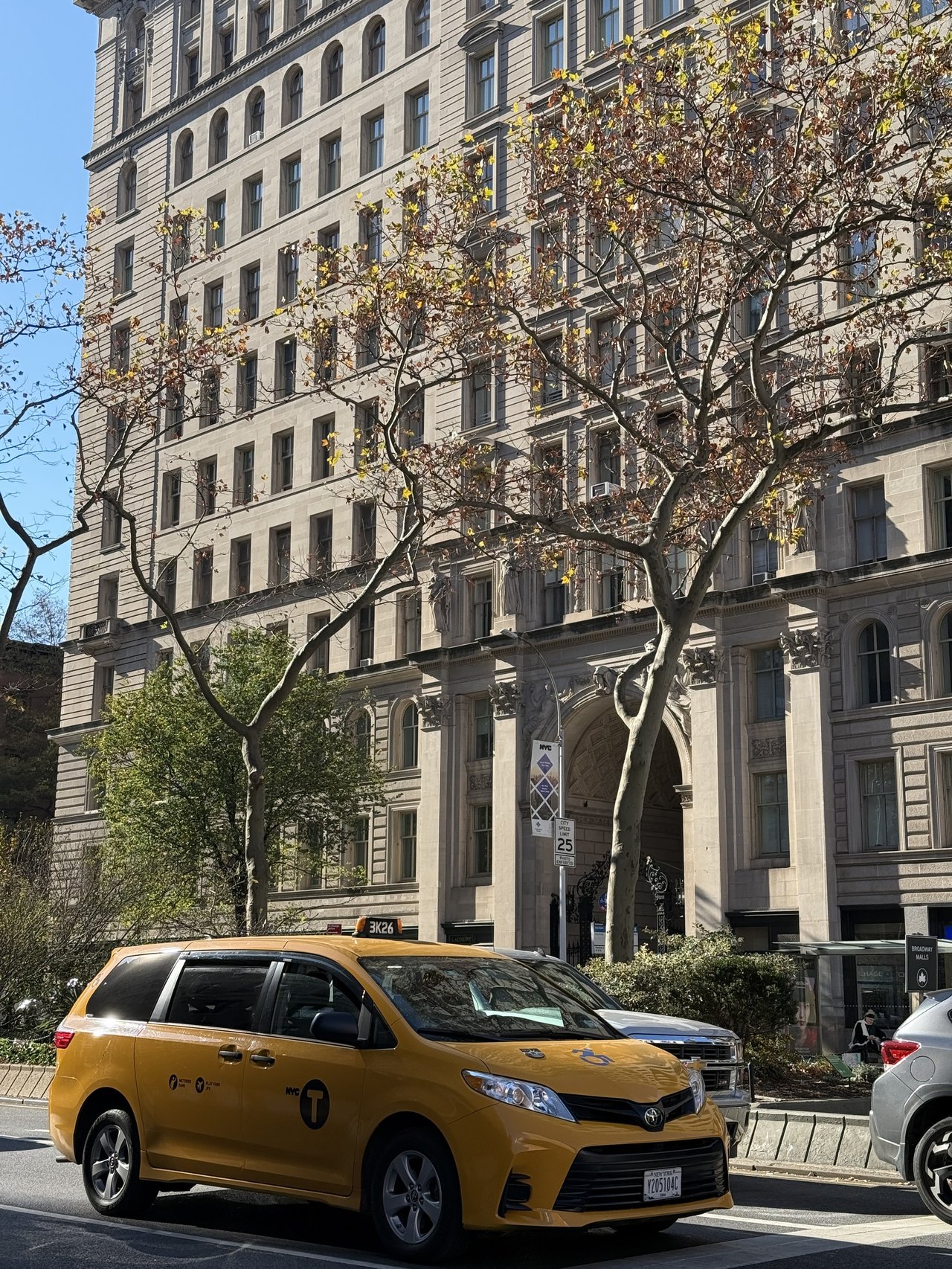
The park side gives you the famous towers and the most selective co-op boards in the neighborhood. The river side gives you a longer run of prewar apartment houses on West End Avenue and Riverside Drive, a park with the Hudson on one side and a parkway underneath it, and a historic district that protects both. In between sit the brownstone blocks, where the Upper West Side's townhouses and small walk-ups live. Two avenues in the same neighborhood, and they answer different questions.
Central Park West from 62nd to 96th Streets is a line of apartment houses built between the 1880s and the 1930s, and the whole run sits inside the Upper West Side/Central Park West Historic District, designated by the Landmarks Preservation Commission on April 24, 1990 [1]. The Dakota came first, built 1880 to 1884; the twin-towered buildings of 1929 to 1931, the San Remo among them, took their shape from the 1929 Multiple Dwelling Law, which let a building on a large plot rise higher in set-back towers above its street wall [2]. The skyline you know from across the lake is a zoning diagram.
The best-known buildings on the avenue are co-ops that converted from rentals decades ago, which means a board of fellow shareholders approves every sale. A park-side purchase comes with a board package and an interview, and several of these boards cap financing or want it all in cash. What goes in that package, and what the toughest boards look for, is in what goes in a co-op board package. Whether a particular building caps financing is a question for the listing agent before you bid. I went through a prewar co-op board myself in 2026, as the buyer, and the package took longer to assemble than the negotiation did. That is normal on both sides of the park, and it is the part buyers underestimate.
The river side developed later, because it was farther from the Ninth Avenue elevated train on Columbus Avenue. Speculative row houses went up along West End Avenue and the side streets from the late 1880s, apartment houses replaced many of them after 1900, and the big Riverside Drive buildings came after 1920 [3]. West End Avenue was meant to be a shopping street and became a residential one instead, lined with 14- to 16-story buildings that resemble one another [4].
Under the drive there is a railroad. The Hudson River Railroad cut along the shore in 1846, and Frederick Law Olmsted drew the plan for a drive and park above it in 1873 [5]. The tracks cut the neighborhood off from the water until Robert Moses's West Side Improvement, begun in 1934, covered them, extended the park on landfill and built the Henry Hudson Parkway, which opened in 1936 [6]. This is the detail that explains a Riverside Drive apartment: the river view is real, and so is the highway between you and it, below the esplanade. Lower floors facing west hear it.
The river side has its own district, Riverside-West End, designated December 19, 1989 and extended on June 26, 2012 and June 23, 2015, covering Riverside Drive from 130 to 227, West End Avenue from the 560s to the 690s and the side streets between [3][7]. Landmark status means facade and window work needs LPC sign-off, which shows up in a co-op's capital budget and in how long a window replacement takes; the rules are in what it means to own in a NYC historic district. The side streets hold the row houses that survived the apartment-house wave [3]; some are still single-family houses, others were cut into small co-ops and rentals, and a townhouse block in the 70s or 80s trades on scarcity.
The numbers cover the whole neighborhood and do not split the two avenues, whose buildings sit well above these medians. In the six months to November 10, 2026, 683 apartments closed on the Upper West Side. The 412 co-op closings had a median of $1,200,000 after 46 days on the market; the 271 condo closings had a median of $1,810,000 and $1,558 a square foot, from the 266 that reported square footage. Co-op square footage is rarely in the public record, so there is no comparable co-op figure per foot (RealPlus, Manhattan, Brooklyn and Queens listing data, pulled November 10, 2026) [8]. How the two forms of ownership differ is in co-op vs condo.
If the building itself is the point, and you can carry a large cash component and a long board process, look at Central Park West. If you want a bigger prewar layout for the money with the river as your view, look at Riverside Drive and West End Avenue, and ask about parkway noise on lower floors facing west. If you want a house, the side streets are the only place to find one. The rest of the neighborhood is on the Upper West Side page. For which boards on each avenue publish financing caps, email me at [email protected] or call 212-516-4569.
This is general information, not tax or legal advice.
Ilana Lee, Licensed Real Estate Salesperson, ILNY. Updated November 24, 2026.
Sources
- NYC Landmarks Preservation Commission: Upper West Side/Central Park West Historic District designation report, LP-1647, April 24, 1990
- NYC Landmarks Preservation Commission: San Remo Apartments designation report, LP-1519, March 31, 1987, and Eldorado Apartments designation report, LP-1521, July 9, 1985, checked November 10, 2026
- NYC Landmarks Preservation Commission: Riverside-West End Historic District designation report, December 19, 1989, and Extension I report, June 26, 2012
- West Side Rag: 145 years of West End Avenue, February 15, 2025
- NYC Parks: Riverside Park highlights
- NYC Parks: Henry Hudson Parkway, historical sign
- Historic Districts Council: Riverside-West End Historic District and Extensions
- RealPlus apartment sales analytics, Upper West Side, closed sales May 15 to November 10, 2026, pulled November 10, 2026