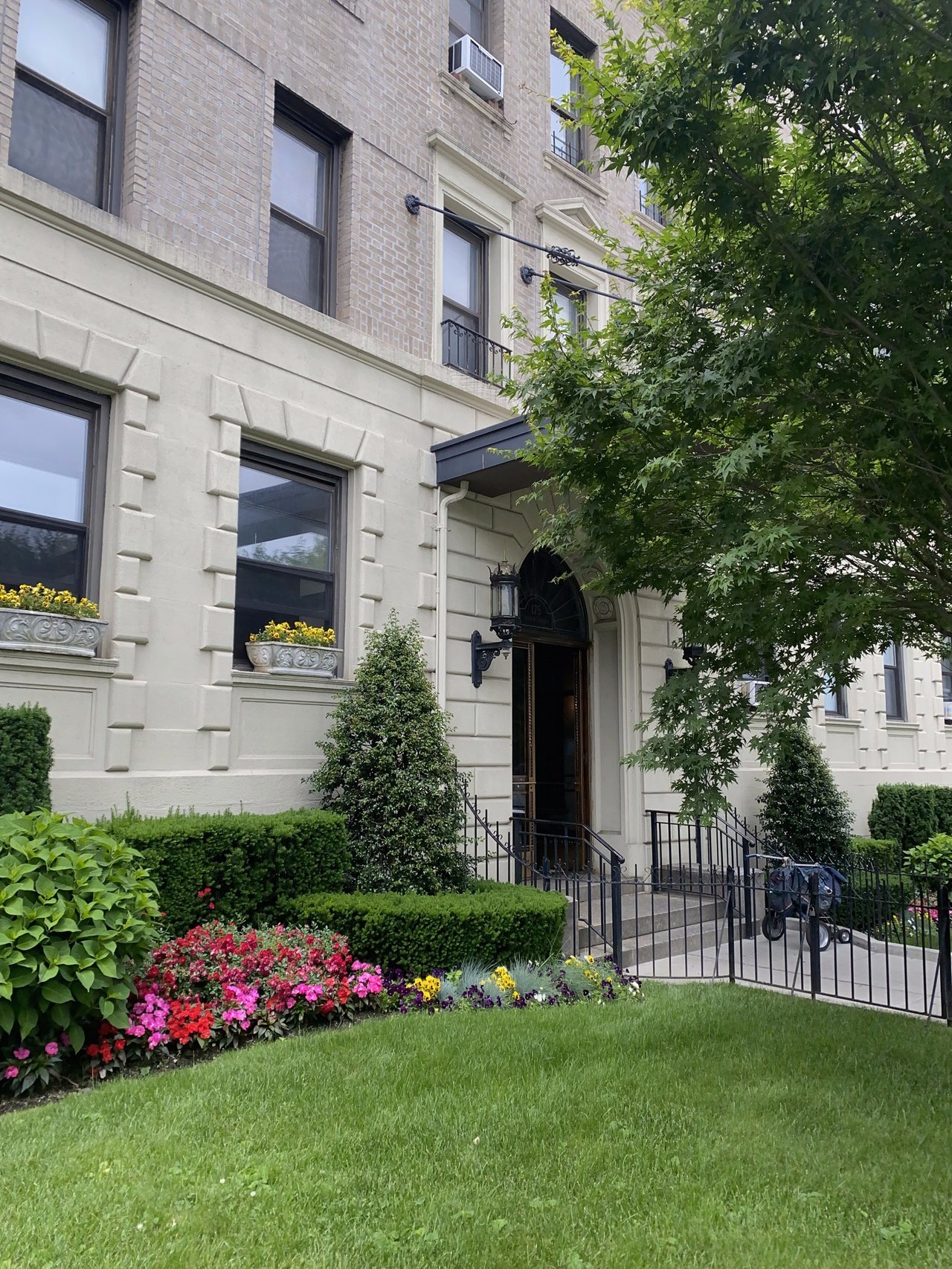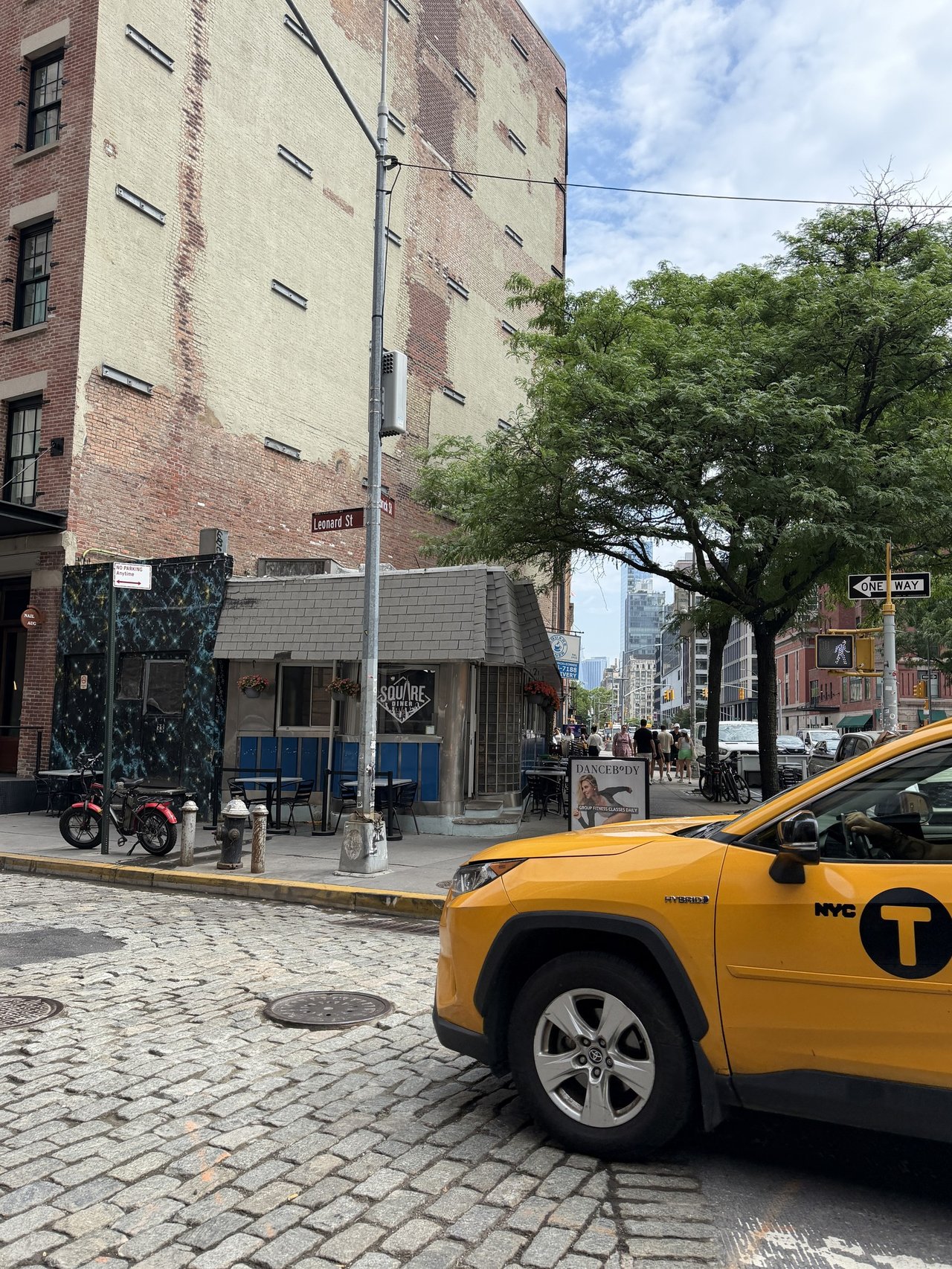
Neither one holds value on its own. What holds value in Tribeca is scarcity, and the two kinds of building are scarce in different ways. The loft conversions sit inside four landmark districts where the stock of 1860 to 1910 warehouses is fixed and cannot grow. The towers are scarce because so few sites are left to build them on, and they sell on what a loft cannot offer: a pool, a staff, an elevator designed for a stroller. The resale question is which of those the next buyer will pay for.
A Tribeca loft began as a shop with storage above it. Between about 1860 and 1910 the houses north of Washington Market were replaced by store-and-loft buildings and warehouses, cast iron and brick on the street [1]. Washington Market, the city's wholesale produce market since 1805, moved to Hunts Point in 1967, and when it went the upper floors emptied [2]. Artists moved in through the late 1960s and 1970s, most of it illegal under the buildings' commercial certificates of occupancy. Columns and long floor plates: the whole look is a leftover from the produce trade.
The law caught up on June 21, 1982, when the state enacted Article 7-C of the Multiple Dwelling Law, the Loft Law. It covered buildings where three or more families had lived independently since April 1, 1980 and were still there on December 1, 1981, called them interim multiple dwellings, and required owners to bring them up to residential code [3][4]. The conversions that followed gave Tribeca what buyers now call a loft: ceilings over ten feet, repeated window bays, and a line of columns that decides where the walls and the sofa go. The older conversions are more often co-ops than condos, which means a board approves every buyer; the difference is in co-op vs condo.
Then the Landmarks Preservation Commission froze the map. It designated Tribeca West on May 7, 1991, the blocks around Duane Park, Hudson Street and North Moore Street; Tribeca East followed on December 2, 1992, Tribeca North and Tribeca South on December 8, 1992, and a South extension on November 19, 2002 [1][5]. Inside a district, facade work, window replacement and rooftop additions need LPC approval. For an owner that is cost and delay; for a buyer it is a promise that no tower rises on the lot next door without going through the same commission. The rules are in what it means to own in a NYC historic district.
The towers of the 2010s, on Leonard Street, Park Place and Murray Street, are condominiums with doormen, amenity floors, central systems and elevators sized for families. They went up on the sites the landmark districts left out, which is why there are so few of them and why each one is marketed against the last on its amenity list. The monthly bill follows from that. A loft co-op with no doorman and no amenity floor has little to pay for beyond the superintendent, insurance, heat and the facade; a tower with a pool, a screening room and a 24-hour staff pays for all of it every month. The listing word "loft" covers a lot of ground; I decoded it and its neighbors in what NYC listing descriptions actually mean.
On resale, I do not have a dataset I trust that separates Tribeca conversions from towers over time, so you will not get a percentage from me. What you can do is reason from supply. The landmark districts freeze the number of loft buildings; the only way to make more lofts is to subdivide the ones that exist, and the floor plates and columns resist that. Towers add supply each time one finishes, and an amenity package dates. Against that, a tower offers what a family or an older buyer may need and a loft often cannot: the elevator that fits a stroller, a staff to take deliveries, air conditioning that was designed rather than retrofitted.
Condos are most of the volume, and the numbers do not split conversions from towers either. In the six months to November 10, 2026, 157 apartments closed in Tribeca at a median of $3,650,000 and $2,025 a square foot; 131 of them were condos, at a median of $3,850,000 and $2,036 a square foot after 56 days on the market, and the median sale closed 6.2 percent under its asking price. The 26 co-op and condop closings had a median of $2,710,000 (RealPlus, Manhattan, Brooklyn and Queens listing data, pulled November 10, 2026) [6].
For a conversion, ask the year of the residential certificate of occupancy, whether the building was ever an interim multiple dwelling under the Loft Law, and whether the sprinklers and the air conditioning are original or upgraded. For a tower, ask for the common charge history and the budget line for the amenity floor. The cash either one takes beyond the price is in how much cash you need to buy, and the rest of the neighborhood is on the Tribeca page. For the budget of a building you are considering, email me at [email protected] or call 212-516-4569.
This is general information, not tax or legal advice.
Ilana Lee, Licensed Real Estate Salesperson, ILNY. Updated November 24, 2026.
Sources
- NYC Landmarks Preservation Commission: Tribeca West Historic District designation report, LP-1713, May 7, 1991
- NYC Economic Development Corporation: Hunts Point Produce Market, opened 1967; Office of the New York State Comptroller: Hunts Point, 2008
- NYC Loft Board: Fact sheet no. 1, Loft Law and Loft Law coverage, rev. March 2024
- New York Multiple Dwelling Law section 281, definition of interim multiple dwelling
- NYC Landmarks Preservation Commission: Tribeca historic districts map, with designation dates; New York Preservation Archive Project: Tribeca Historic Districts
- RealPlus apartment sales analytics, Tribeca, closed sales May 16 to November 10, 2026, pulled November 10, 2026